- El Capitan Vmdk
- Install El Capitan On Virtualbox Mac
- Install El Capitan Virtualbox Windows
- Install Mac Os El Capitan On Virtualbox
- El Capitan Os X Download
- El Capitan Virtualbox Image
I am very interesting to install Mac OS in my desktop computer using VirtualBox. I have created steps how to install Mac OS in VirtualBox. But, you need existing Mac OS to create bootable Mac OS.
I want to install Mac El Capitan (10.11) in my VirtualBox. I dont have fast internet connection. So, I am search an iso Mac El Capitan over internet.
Well, read on to learn how you can install Mac OS X El Capitan on PC without a Mac, using VirtualBox. VirtualBox is a virtualization software that enables an operating system to run as a program or application. VirtualBox allows operating systems to be installed on it, by creating a virtual machine. Another way to trial El Capitan is to install it in a virtual machine. There are various virtualisation apps for the Mac, including Parallels Desktop, VMware Fusion and the free of charge Oracle. To install VirtualBox, click on the setup then hit next and next. Finally, click “Finished”. Create a New Virtual Machine. Now, you have to create a new Virtual Machine. Open the VirtualBox then tap on “ New ” at the upper left-hand side and name the Virtual Machine “ OS X El Capitan “.
1. Download El Capitan iso image. If you have bootable Mac, you can continue to step 4. I donwnload the iso image from this link : http://getpcsoft.wikisend.com/mac-os-x-1011-el-capitan-free-download.html.
2. The Mac iso image from link above not bootable (El Capitan.dmg). So, we need to convert Mac not bootable to iso bootable. I have convert *.dmg file to iso bootable iso using this script (you need to run this script from your existing Mac).
3. Using above script, we get ElCaption.iso. This file is bootable iso image needed to install El Capiton (Mac 10.11) in VirtualBox.
El Capitan Vmdk
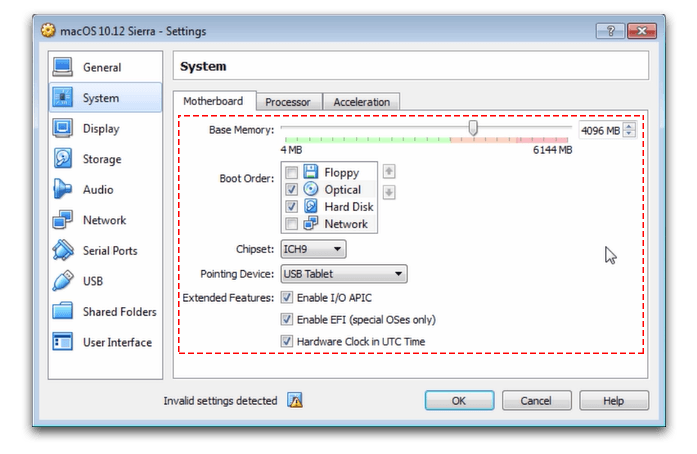
4. Open VirtualBox, create a new Mac project. I have created project using this setting. If you want change project Name, dont forget to edit text command in next steps too.
5. Close VirtualBox. Choose a Mac Model similar to your host system. Open your console and type this text. I have choose “MacBookPro11,3” in my desktop computer.
6. Optional- For some host systems eg those with Haswell CPUs, you might have to spoof an older CPU to avoid VirtualBox errors. You can try from one of the following if this happens:
7. Open VirtualBox and run our Mac10.11 Project. I think you already know how to install Mac in your computer. If not, you can search over internet.
8. When you success install Mac In your VirtualBox, you can change default screen resolution using this command :
9. Adding serials and other SMBIOS details for the System Information Screen (optional)
I have success using this steps and this is how look Mac 10.11 in VirtualBox
Source :
http://forums.macrumors.com/threads/how-to-create-el-capitan-os-x-bootable-dvd.1923894/page-2#post-22048507
http://anadoxin.org/blog/creating-a-bootable-el-capitan-iso-image.html
http://www.insanelymac.com/forum/topic/309654-run-vanilla-os-x-el-capitan-yosemite-or-mavericks-in-virtualbox-5010-on-a-windows-host/
Install El Capitan On Virtualbox Mac
Question or issue on macOS:
I have used brew install openssl to download and install openssl v1.0.2f, however, it comes back saying:
And when I do openssl version -a it always gives me:
How can I replace the old version with the new one? I’ve searched a lot on how to do this, but the solutions online don’t seem to work for me…
How to solve this problem?
Solution no. 1:
Execute following commands:
You will have the latest version of openssl installed and accessible from cli (command line/terminal). Since the third command will add export path to .bash_profile, the newly installed version of openssl will be accessible across system restarts.
Solution no. 2:
Only
has worked for me!
Thank you mipadi.
Solution no. 3:
Try creating a symlink, make sure you have openssl installed in /usr/local/include first.
More info at Openssl with El Capitan.
Solution no. 4:
I can’t reproduce your issue running El Cap + Homebrew 1.0.x
Upgrade to Homebrew 1.0.x, which was released late in September. Specific changes were made in the way openssl is linked. The project is on a more robust release schedule now that it’s hit 1.0.
You should fix any issues raised by brew doctor before proceeding.
Note:Upgrading homebrew will update all your installed packages to their latest versions.
Solution no. 5:
I reached this page when I searched for information about openssl being keg-only. I believe I have understood the reason why Homebrew is taking this action now. My solution may work for you:
Use the following command to make the new openssl command available (assuming you have adjusted PATH to put /usr/local/bin before /usr/bin):
ln -s /usr/local/opt/openssl/bin/openssl /usr/local/bin/When compiling with openssl, follow Homebrew’s advice and use
-I/usr/local/opt/openssl/include -L/usr/local/opt/openssl/libAlternatively, you can make these settings permanent by putting the following lines in your .bash_profile or .bashrc:
export CPATH=/usr/local/opt/openssl/include
export LIBRARY_PATH=/usr/local/opt/openssl/lib
Solution no. 6:
Install El Capitan Virtualbox Windows
This is an old question but still answering it in present-day context as many of the above answers may not work now.
The problem is that the Path is still pointing to the old version. Two solutions can be provided for resolution :
- Uninstall old version of openssl package
brew uninstall openssland then reinstall the new version :brew install openssl - point the PATH to the new version of openssl.First install the new version and now(or if) you have installed the latest version, point the path to it:
echo 'export PATH='/usr/local/opt/openssl/bin:$PATH' >> ~/.bash_profile
Solution no. 7:
this command solve my problem on github CI job and virtualbox
Install Mac Os El Capitan On Virtualbox
Solution no. 8:
El Capitan Os X Download
You can run brew link openssl to link it into /usr/local, if you don’t mind the potential problem highlighted in the warning message. Otherwise, you can add the openssl bin directory to your path:
Solution no. 9:
To replace the old version with the new one, you need to change the link for it. Type that command to terminal.
El Capitan Virtualbox Image
Check the version of openssl again. It should be changed.